Garden Clearance Parsons Green — Recycling and Sustainability
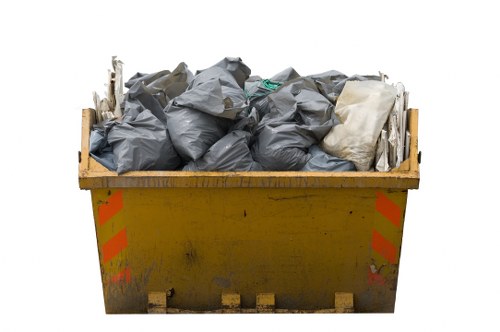 Garden Clearance Parsons Green puts sustainability at the heart of every job. Our approach to clearing gardens in Parsons Green and the surrounding Fulham area focuses on maximising reuse, minimising landfill and supporting local circular-economy initiatives. With a clear operational policy and measurable targets, we ensure that each clearance contributes to a greener west London neighbourhood.
We set an ambitious recycling percentage target for all clearances: a 75% recycling and reuse rate by 2028 across our Parsons Green garden clearance operations. That target covers organic garden arisings, timber, metals, bricks and any recoverable household items removed during a clearance. The target is supported by practical sorting at source, efficient separation in our low-carbon fleet and formal partnerships with local reuse schemes.
How we separate and process waste
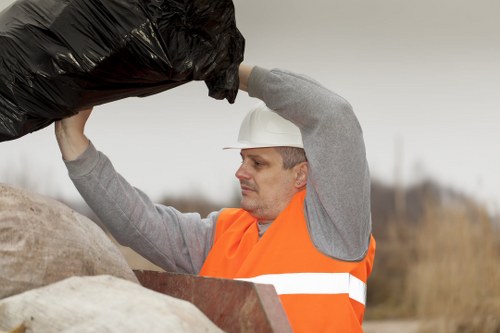
On-site, our teams follow a borough-aware separation routine that aligns with local council approaches: food and green waste streams are kept distinct from dry mixed recycling and bulky waste. This mirrors the wider borough approach to waste separation in Hammersmith & Fulham and neighbouring boroughs, where separate collections for organic material and mixed recyclables help raise diversion rates. We also do pre-sort checks to isolate hazardous items and to identify goods suitable for donation.
Local transfer stations and materials recovery
We route sorted loads to accredited local transfer stations and materials recovery facilities (MRFs) across west London. These facilities accept segregated green waste, timber, stone and mixed recyclables, and they provide the infrastructure for composting, chipping and materials reclamation. Working with nearby transfer stations helps reduce haulage miles and ensures that materials are processed in the most appropriate stream.
Our logistics prioritise consolidation: smaller loads from Parsons Green are combined at transfer hubs to create efficient, fuller movements to specialist processors. This reduces the number of journeys and lowers the carbon footprint per tonne of material moved. We record tonnage and outcomes for each transfer station, which feeds into our recycling-rate monitoring and annual sustainability report.
 Partnerships with charities and community groups
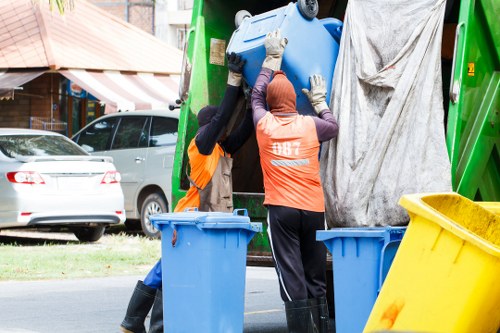
We maintain active partnerships with a range of local charities and social enterprises that accept reusable garden furniture, plant pots, tools and salvageable timber. Items in good condition are cleaned and diverted to community reuse projects, allotment societies and furniture reuse organisations. These partnerships not only raise our reuse percentage but also deliver social value back into Parsons Green and surrounding neighbourhoods.
We also work with local gardening projects, community orchards and school eco-networks to redirect compost, chipped wood and surplus topsoil for community use. When a clearance yields bulky soil or vegetation, low-emission chip-and-compost routes are prioritised so organic material becomes a resource rather than waste. This closed-loop thinking is central to our Parsons Green garden clearance ethos.
To ensure transparency, we maintain a waste audit for every job: recorded weights for recovered materials, destinations at transfer stations, and final processing outcomes. These audits underpin our 75% diversion ambition and are shared with partners where appropriate to demonstrate real outcomes, ensuring accountability for garden clearance in Parsons Green and nearby districts.

Low-carbon fleet and operational emissions
Reducing transport emissions is essential for sustainable garden clearance. We operate a mixed fleet of low-carbon vans and small trucks, including electric vans for local short-haul trips and Euro-6 hybrid vehicles for longer transfers. Our vehicle routing is optimised to avoid unnecessary mileage in the borough, and we are progressively replacing older diesel stock with zero-emission models to cut operational CO2 and NOx emissions.
Recycling activities relevant to the area
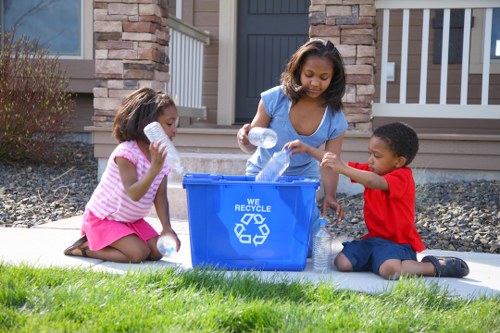
Typical recycling activities in Parsons Green include:
- Composting and chipping of garden waste for reuse on community sites
- Timber salvage and reprocessing for fencing, planters and small construction projects
- Metal recovery and scrap separation for recycling
- Reuse and redistribution of intact garden furniture, tools and pots to charities
These activities fit with the boroughs' overall strategy, which emphasises source separation and local processing. Our teams aim to complement council collections by diverting bulky and high-volume garden arisings that standard curbside services cannot easily accept.
Monitoring progress and continuous improvement
We continually review routing, on-site sorting practices and charity partnerships to improve performance. Quarterly reports track our recycling percentage and identify opportunities to increase reuse, for example by expanding charity networks or investing in on-site chipping equipment. This structured improvement plan helps us move steadily toward the 75% target.
Final note on sustainable clearances
Choosing Garden Clearance Parsons Green for garden clearance means choosing an operator committed to local sustainability: measured recycling targets, collaboration with west London transfer stations, meaningful charitable partnerships and a low-carbon van fleet all combine to make clearances here as eco-friendly as possible. We balance practical service delivery with a strong environmental mission so that every cleared garden becomes part of a greener Parsons Green community.